H2: What a Volcano Really Is
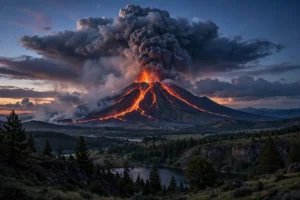
A volcano is not simply a mountain that happens to explode. It is an opening in the Earth’s crust where molten rock, gases, and ash can reach the surface from below. Beneath the surface, rock can become hot enough to melt partially, forming a thick, hot liquid called magma. When magma collects in a chamber underground, pressure builds, much like pressure builds in a shaken bottle. If that pressure finds a way upward through cracks in the crust, the magma can rise and eventually erupt at the surface, where it is called lava once it flows out. Over many eruptions, layers of lava and ash build up around the opening, forming the cone-shaped mountain most people picture when they hear the word volcano. Some volcanoes are tall and steep, others are broad and gentle, and those shapes tell a story about the kind of eruptions that built them.
H2: Why Magma Rises in the First Place
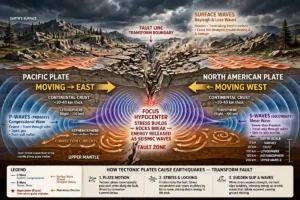
Magma forms where the Earth’s interior is hot enough and the conditions are right for rock to melt, often near plate boundaries or over hot spots deep in the mantle. At some boundaries, plates move apart and pressure on the rock below decreases, allowing it to melt. At other boundaries, one plate sinks beneath another, carrying water and other materials downward that help lower the melting point of the rock above. In a hot spot, a plume of unusually hot material rises from deep inside the Earth, melting rock as it goes, regardless of plate boundaries. The Hawaiian Islands are a famous example of a hot spot, built over millions of years as the Pacific Plate slowly moved over a stationary plume. Once magma forms, it is generally less dense than the solid rock around it, so it tends to rise, collecting in chambers where it can cool slightly, mix with other magma, and gather gases before an eruption.
H2: Pressure, Gas, and the Moment of Eruption
The moment of eruption is largely a story about pressure and gas. Magma contains dissolved gases, similar to the fizz dissolved in a sealed bottle of soda. As long as the magma stays deep underground under great pressure, those gases stay dissolved. As magma rises and pressure drops, the gases begin to form bubbles, increasing pressure inside the magma chamber and in the narrow conduit leading to the surface. If the magma is runny, gases can escape relatively easily, and the eruption may be a gentle lava flow. If the magma is thick and sticky, gases become trapped, pressure builds much higher, and the eruption can be explosive, shattering magma into ash and hurling rock fragments into the air. That difference in thickness, called viscosity, is one of the most important factors in how dangerous an eruption becomes.
H2: Different Kinds of Eruptions
Not all volcanic eruptions look alike, and scientists describe them by how the material leaves the volcano. Some eruptions produce slow-moving lava flows that people can often walk away from, though the flows can still destroy roads, homes, and farmland in their path. Other eruptions produce fountains of lava, glowing rivers of molten rock, and ash clouds that rise high into the sky. The most explosive eruptions can send ash across continents, darken skies, and produce fast-moving clouds of hot gas and rock that are extremely dangerous. Ash itself is not soft like fireplace ash; it is made of tiny, sharp fragments of rock and glass that can damage lungs, engines, and buildings, and even a thin layer can disrupt travel and power. Understanding these differences helps communities prepare for the specific hazards their nearby volcano may produce, rather than treating every volcano as if it behaved the same way.
H2: What Comes Out of a Volcano
A volcanic eruption releases more than lava. It can release ash, gases such as water vapor and sulfur dioxide, and solid fragments ranging from fine dust to large blocks of rock. Lava flows cool and harden into new rock, gradually building new land and, over time, rich soils that can support farming in volcanic regions. Gases released during an eruption can affect air quality nearby and, in very large eruptions, can influence climate for a time by reflecting sunlight. Ash falling on roofs can add heavy weight, ash in water supplies can cause contamination, and ash in the air can close airports far from the volcano itself. This mix of creation and destruction is why volcanoes fascinate scientists: they build new land and fertile soil, yet they demand respect and careful monitoring from everyone who lives near them.
How Scientists Monitor Volcanoes
Scientists monitor active volcanoes with a range of tools, including seismometers that detect tiny earthquakes caused by magma moving underground, instruments that measure swelling of the ground as a magma chamber fills, and sensors that track changes in gases escaping from the volcano. Satellite observations, as described in how satellites work, can also reveal ground deformation and ash clouds over wide areas. When several signs change together, such as more frequent small earthquakes, rising gas levels, and ground swelling, scientists may raise alert levels and warn nearby communities. Monitoring cannot predict an eruption with perfect certainty, but it gives people valuable time to prepare, and in many cases it has allowed evacuations before a major eruption. That work is part of the broader scientific effort described in research in everyday life and scientific inquiry.
H2: Living Near a Volcano
Millions of people live near volcanoes, drawn by fertile soil, geothermal energy, tourism, and deep cultural ties to the land. Living near a volcano does not mean living in constant danger, but it does mean understanding local hazards, knowing evacuation routes, and paying attention to official warnings. Emergency plans often include a go-bag, a family meeting point, and a way to receive alerts even if power or phone service fails. After an eruption, ash cleanup requires masks and care, because ash is abrasive and can irritate lungs and eyes. Communities that practice these steps, and that trust scientific monitoring, are far safer than communities that ignore warnings or assume a quiet volcano will stay quiet forever. The same respect for evidence guides work from protecting ecosystems to nuclear fusion.
H2: Volcanoes and the Story of Earth
Volcanoes are not rare accidents on an otherwise calm planet; they are part of how Earth works. They have built islands, shaped continents, released gases that helped form the early atmosphere, and created some of the most fertile land on the planet. Studying volcanoes also helps scientists understand other worlds, because volcanic features appear on the Moon, Mars, and moons of distant planets, each telling a story about heat and movement inside those bodies. From the rockets described in how rockets work to the lunar missions in Artemis program, exploration keeps expanding our picture of how planets evolve. A volcano, seen up close, is both powerful and instructive: a reminder that the ground beneath us is warm, active, and still being shaped, and that careful science is our best guide to living safely alongside it.
Volcanoes, Climate, and the Wider Earth System
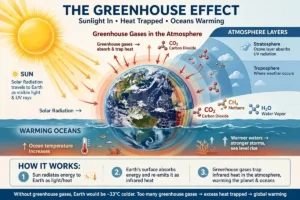
Volcanoes do not act in isolation; they are part of a wider Earth system that includes the atmosphere, oceans, and climate. A very large eruption can inject ash and sulfur gases high into the atmosphere, where they can reflect sunlight and cool the planet for months or even a few years. Smaller eruptions have more local effects, affecting air quality, agriculture, and travel near the volcano. Over geological time, volcanic outgassing has also contributed gases to the atmosphere, helping shape the air we breathe today. This connection between deep Earth processes and the surface world is one reason scientists study volcanoes alongside weather, oceans, and ecosystems, rather than treating each topic separately. The same curiosity drives work on dark matter, on protecting ecosystems, and on the energy systems described in solar panels and wind turbines.
Volcanoes also create some of the most striking landscapes on Earth, from black sand beaches formed by cooled lava meeting the sea to crater lakes that fill with rainwater over centuries. Those landscapes attract visitors, support unique plants and animals, and provide geothermal heat that some communities use for electricity and heating. Yet beauty and usefulness do not remove risk, and the safest way to enjoy a volcanic landscape is with respect for official guidance, marked trails, and alert levels. Scientists continue to improve monitoring, combining ground sensors, gas measurements, and satellite views with models of how magma moves underground. Even the study of distant worlds, from black holes to the energy research in nuclear fusion, shares the same approach: observe carefully, test ideas against evidence, and use what we learn to live more safely on a dynamic planet.
Respect, Preparation, and Wonder
Volcanoes inspire wonder because they reveal forces far larger than everyday life, yet that wonder should always be paired with respect and preparation. If you visit a volcanic area, follow marked paths, heed warning signs, and check official alerts before you go, especially after recent activity. Keep a safe distance from crater rims, lava flows, and ash-covered ground, and remember that conditions can change quickly. With those precautions, a visit to a volcanic landscape can be both thrilling and educational, offering a direct view of how Earth builds new land. That combination of awe and caution is the right attitude toward volcanoes: admire their power, understand their science, and prepare sensibly for their risks.