H2: What Makes a Projector Good for Home Theater
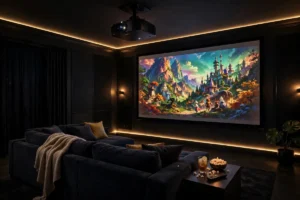
A good home theater projector is not simply the brightest or the most expensive model on the shelf. It is the one that fits your room, your screen, your seating distance, and the way you actually watch movies. A projector that looks wonderful in a dark, dedicated theater room can look washed out in a bright living room, and a model built for a huge screen can feel overwhelming in a small apartment. That is why the best place to start is not a specification sheet but a simple picture of your own space. Measure the distance from where the projector will sit to where the screen will hang, notice how much daylight reaches the room in the evening, and think about whether you watch mostly at night or all day long. Those three answers narrow the choices far more quickly than any brand name can, and they help you avoid paying for power you will never use. Like many of the coolest gadgets of the year, a projector is best judged by how it performs in real life, not by how impressive it sounds in a store demonstration.
H2: Brightness, Resolution, and Color
Brightness matters because it decides whether the picture stays bold when the room is not perfectly dark. In a room you can make truly dark, a modest brightness level can look rich and cinematic, with deep shadows and comfortable contrast. In a room with lamps, light-colored walls, or windows without heavy curtains, you will want more brightness so the image does not fade into a pale gray. Resolution is the next question, and for most home viewers it comes down to how close you sit and how large the screen is. On a large screen viewed from a normal sofa distance, a sharper image shows finer detail in faces, landscapes, and text. On a smaller screen, the difference is harder to notice. Color matters just as much, because a projector can be sharp and bright yet still make skin tones look strange or grass look unnatural. Look for a picture that feels balanced rather than exaggerated, and remember that a calmer, more natural image is usually easier to watch for a full movie. Reading tips for discovering hidden tech gems can help you compare new models without getting lost in marketing language.
H2: Throw Distance, Screen Size, and Placement
Throw distance is the distance a projector needs to fill a screen of a certain size, and it is one of the most practical details to check before you buy. Some projectors need a long room to create a large image, while short-throw models can sit close to the wall and still fill a wide screen. If your room is small, a short-throw design can be the difference between a theater feel and a picture that is simply too small. Placement also affects everyday comfort. A projector mounted on the ceiling stays out of the way, but it needs a power outlet and a cable route that looks tidy. A projector on a shelf or table is easier to move and adjust, but it must sit level and clear of heads, pets, and passing traffic. Keystone correction and lens shift can help square up the image, yet they work best as small adjustments, not as fixes for a projector placed far off-center. A home full of connected devices in a modern home also benefits from planning where cables, speakers, and streaming devices will live before the projector goes up.
H2: Sound, Streaming, and Everyday Use
Picture quality gets most of the attention, but sound and everyday ease decide whether you actually use the projector every week. Many projectors include small built-in speakers that are fine for a casual video, but a movie night usually sounds far better with a separate soundbar or speaker system. Think about how the projector connects to your speakers, your streaming stick or box, and any game console you own, and check that you have enough ports for everything you plan to plug in. Wireless connections can reduce clutter, and learning how Wi-Fi works helps you understand why a strong, steady home network matters for smooth streaming. A remote that is simple to use, a menu that is easy to read in the dark, and a startup time that does not test your patience all add up over months of use. As how smart devices change everyday life shows, the most satisfying home technology is often the technology that quietly fits into routines you already enjoy.
H2: Setting Up Your Room for the Best Picture
Once the projector is home, small room choices can improve the picture more than any setting menu. Darker walls, a plain screen surface, and curtains that block evening light all help the image look deeper and more detailed. Even the color of a nearby rug or sofa can reflect light back onto the screen, so a room that feels cozy and dim will usually beat a bright, glossy room for movie night. Take time to focus the lens carefully, center the image, and try a familiar movie scene you know well. That scene becomes your reference point: if faces look natural and dark scenes still show detail, you are close to a good setup. Many modern devices rely on tiny, powerful parts, and how microchips are made is a useful reminder of how much engineering sits inside the quiet box on your shelf. Pairing good sound with that picture completes the effect, much as how noise-cancelling headphones work explains the clever audio engineering behind another popular home device.
A Simple Checklist Before You Buy
Before you spend anything, write down your room size, your viewing distance, your light levels, and your budget, and then compare only the projectors that fit those facts. Check the throw distance, the number and type of ports, the noise level of the fan, and the cost and availability of a replacement lamp if the model uses one. Read the return policy as well, because a projector that looks perfect in a review may still feel wrong in your room. Finally, plan your screen: a smooth, flat wall can work for a first test, but a proper screen usually gives a cleaner, more even picture. Keeping up with latest tech trends and rise of emerging technologies can help you spot useful features early, while software trends shaping new devices offers a broader view of where home entertainment technology is heading.
H2: Getting the Most From Your Projector Over Time
The best projector for home theater is the one you keep enjoying long after the novelty wears off. Keep the lens clean with a soft cloth, give the projector room to breathe so it does not overheat, and turn it off properly rather than cutting power suddenly. If the picture ever looks dim, check the lamp or light source settings first, then check the room lighting, before assuming something is broken. Streaming quality also depends on your connection, so a basic understanding of how the internet works and how drones work can help you place your router and devices for fewer interruptions. With a sensible room, honest expectations, and a setup matched to how you really watch, a projector can turn an ordinary evening into a small event, night after night, without needing the most expensive model in the store.
H2: Common Mistakes to Avoid When Choosing a Projector
A common mistake is choosing a projector by brightness alone, without thinking about room light, screen size, or seating distance. A very bright image in a dark room can feel harsh, while a dim image in a bright room can feel flat, so balance matters more than a single number. Another mistake is forgetting about sound, cables, and mounting until after the purchase, which can lead to extra trips, adapters, or a setup that looks messy. It also helps to avoid placing the projector where people will walk in front of the beam, since shadows across the screen quickly break the movie experience. Taking a little extra time to plan placement, sound, and lighting usually saves frustration later, and it helps a modest projector outperform a more expensive one that was never set up properly.
H2: Questions Worth Asking Before You Decide
Before you decide, ask how loud the fan is during quiet scenes, how easy the menu is to use in the dark, and how long the light source is expected to last under normal use. Ask whether the projector works well with the streaming device or console you already own, and whether it has the ports you need without an adapter. Ask about the return policy and the warranty, because a home theater purchase should feel safe to test in your own room. It is also worth asking how the projector handles everyday content, not just movies, since many people use the same screen for sports, shows, and family videos. A projector that handles all of those comfortably is more useful than one that shines only in a perfect demonstration.
H2: Living With Your Choice
Over time, the best projector is the one that fits your habits. If you watch mostly in the evening, a darker room and a comfortable sound setup will matter more than chasing the newest feature. If you move the projector between rooms, a lighter model with simple controls may be better than a larger, more complex one. Keep the remote in a consistent place, label your cables if you have several devices, and note the settings that work best for movies, sports, and daytime viewing. Small habits like these make movie night easy to start, which is the real test of any home theater purchase. When starting is easy, you will use the projector often, and that regular enjoyment is worth far more than a specification you rarely notice.