A journey into scientific inquiry is therefore much more than a study of laboratory experiments. It is an ongoing process of curiosity, observation, experimentation, analysis, communication, and revision. Modern discoveries also demonstrate how closely scientific research is connected with technology, medicine, environmental protection, engineering, and everyday life.
For a broader look at how research can influence ordinary experiences and decisions, how research shapes our everyday lives provides a useful starting point.
What Is Scientific Inquiry?
Scientific inquiry is a systematic approach to investigating questions about the natural and physical world. Although the exact process can vary between disciplines, researchers generally begin with an observation, problem, or question. They then gather information, develop possible explanations, collect evidence, analyze the results, and communicate their conclusions.
The process is not always linear. An experiment can produce an unexpected result, forcing researchers to reconsider an assumption or formulate a new question. A new observation can also open an entirely different field of investigation.
This willingness to revise explanations is an important characteristic of science. Scientific knowledge develops as evidence accumulates, methods improve, and researchers find better ways to explain observations.
Curiosity: The Starting Point of Discovery
Many scientific investigations begin with a simple question: Why does something happen? What causes a particular pattern? Can an existing process be improved? What happens when conditions change?
Curiosity turns ordinary observations into opportunities for investigation. A scientist might notice an unusual biological behavior, an unexpected chemical reaction, an environmental change, or a previously unexplained physical phenomenon.
Technology can expand this curiosity by giving researchers new ways to observe and measure the world. Developments discussed in the rise of emerging technologies illustrate how new technological capabilities can create additional opportunities for exploration and experimentation.
Observation and the Collection of Evidence
Observation is fundamental to scientific inquiry. Researchers need reliable information before they can evaluate a hypothesis or explain a phenomenon. Depending on the discipline, observation may involve field studies, laboratory measurements, imaging systems, sensors, computer simulations, surveys, or other forms of data collection.
Modern connected technologies have significantly expanded the amount and variety of information researchers can collect. The development of connected systems and sensors is explored further in the impact of IoT and smart devices.
Careful observation also requires attention to measurement quality. Researchers must consider whether their instruments are appropriate, whether samples are representative, and whether the information collected is sufficient to answer the original question.
The Role of Hypotheses
A hypothesis is a proposed explanation that can be investigated using evidence. It helps researchers turn a broad question into a testable proposition.
A useful hypothesis should be specific enough to investigate. Researchers then design observations or experiments that can provide evidence for or against the proposed explanation.
The purpose is not simply to prove an idea correct. Scientific testing can reveal weaknesses, unexpected relationships, or results that require an alternative explanation. This makes hypothesis testing an important mechanism for refining scientific knowledge.
Experimentation and Controlled Testing
Experiments allow researchers to examine relationships under defined conditions. In a controlled experiment, researchers may change one variable while attempting to keep other relevant conditions consistent.
Different scientific disciplines use different experimental approaches. A laboratory scientist may manipulate chemical concentrations, while a biologist may compare organisms under different environmental conditions. An engineer may test a material or system under controlled loads.
Technology increasingly supports these processes through advanced instruments, automation, modeling, and software. Research into software development trends is particularly relevant because computational tools are now deeply integrated into many scientific and technical workflows.
Data: Turning Observations Into Knowledge
Scientific inquiry depends heavily on data. Measurements, experimental results, observations, and computational outputs provide the evidence researchers use to evaluate ideas.
Collecting data, however, is only the beginning. Researchers must organize, analyze, interpret, and communicate it responsibly. Statistical methods can help identify patterns and relationships while reducing the likelihood of drawing conclusions from random variation.
Computing has become an important part of this process. Researchers can analyze large datasets, model complex systems, identify patterns, and perform calculations that would be difficult to complete manually.
Developments in the latest technology trends demonstrate how increasingly capable digital tools continue to influence information processing and technical research.
Scientific Inquiry and Microbiology
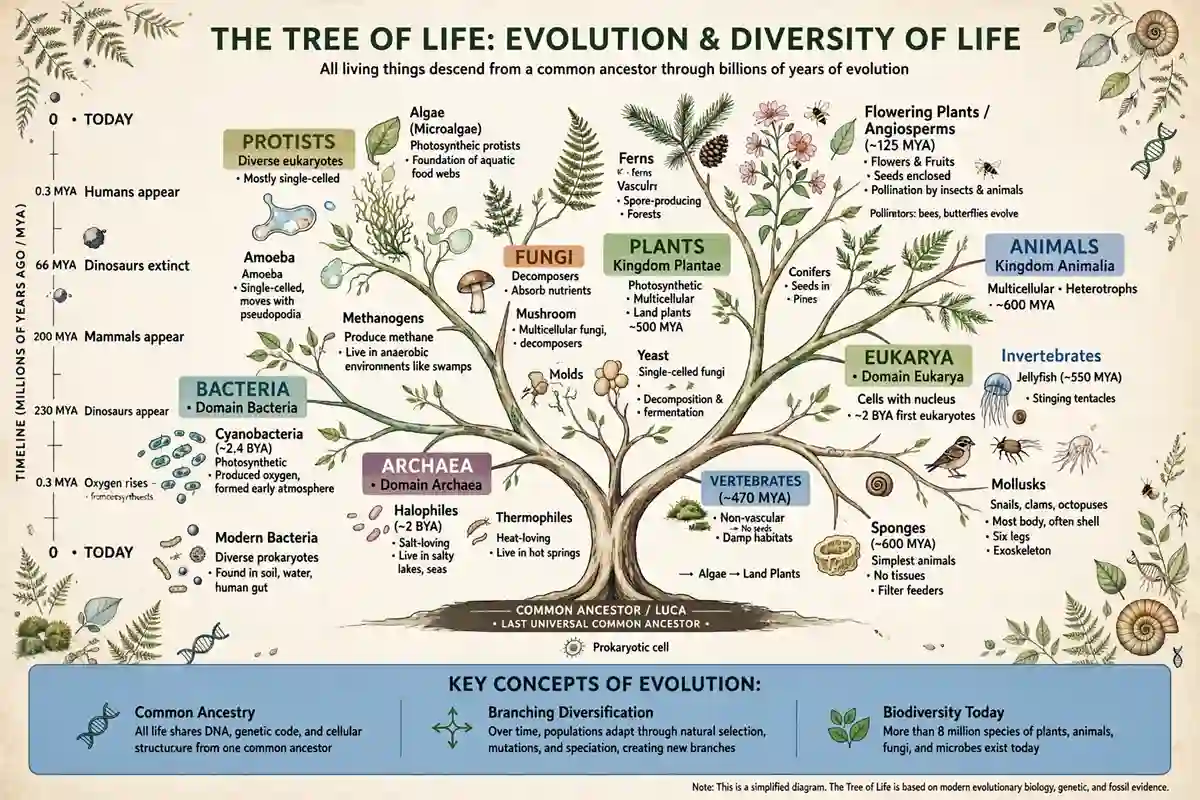
Microbiology provides an excellent example of how scientific inquiry can reveal worlds that cannot be observed easily with the naked eye. Researchers study microorganisms to understand their structures, behaviors, interactions, and effects on larger biological systems.
Investigations may examine bacteria, fungi, viruses, or other microscopic life forms. Laboratory techniques, microscopy, molecular analysis, and controlled experimentation help researchers investigate questions at scales that were once extremely difficult to study.
Readers interested in this field can explore the fascinating world of microbiology for additional context on the microscopic side of scientific discovery.
Science and Environmental Research
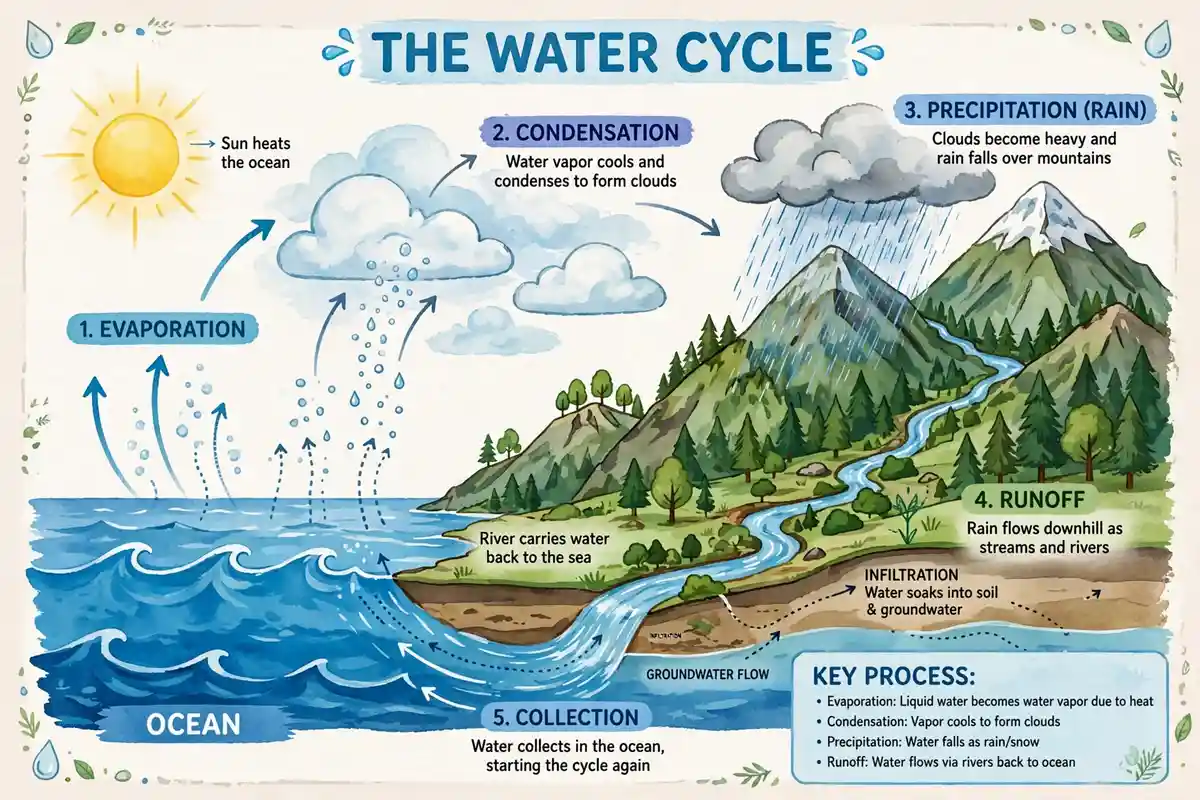
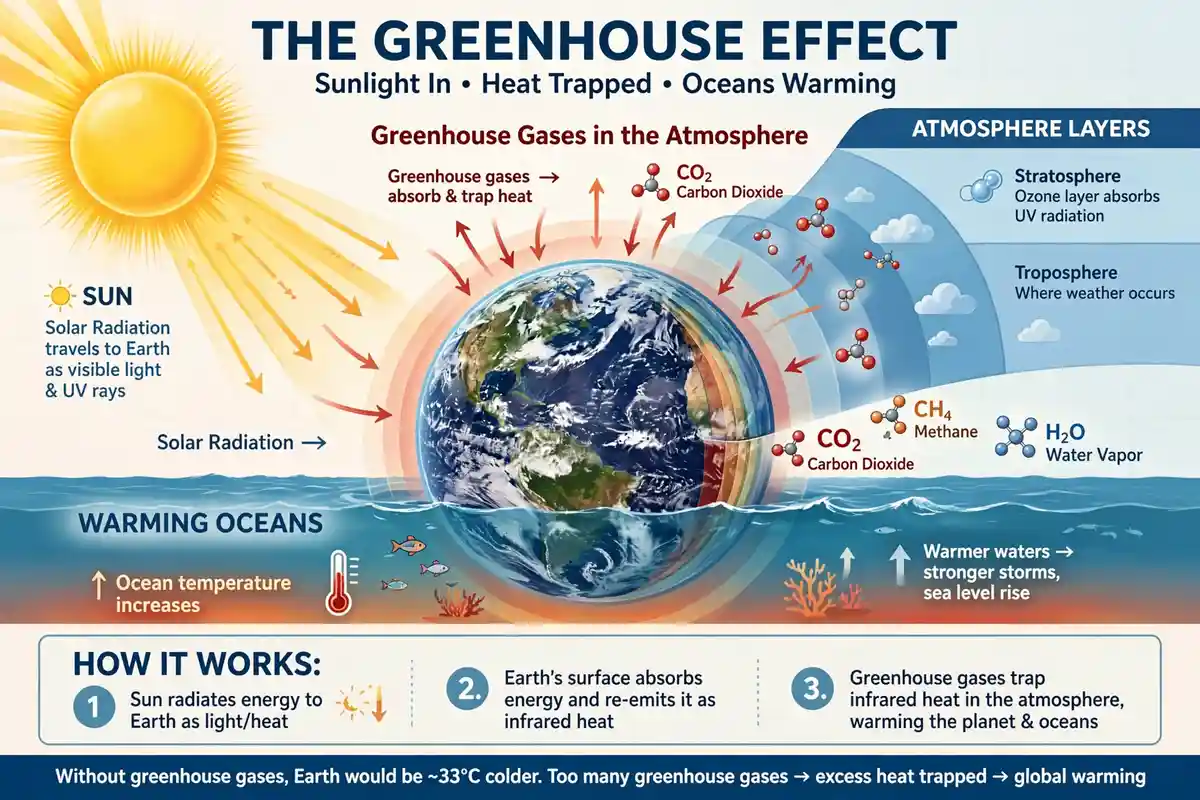
Scientific inquiry is also essential for understanding ecosystems and environmental change. Researchers investigate biodiversity, climate systems, pollution, natural resources, habitats, and interactions between organisms and their surroundings.
Environmental science often requires collaboration between multiple disciplines. Biology, chemistry, geology, atmospheric science, computer science, and other fields can contribute different types of evidence to the same research question.
The relationship between scientific investigation and environmental protection is explored in science’s role in protecting our ecosystems.
Technology as an Extension of Scientific Inquiry
Science and technology have a close and continuously evolving relationship. Scientific discoveries can lead to new technologies, while technological advances can give scientists new ways to investigate questions.
Advanced sensors, computing systems, imaging equipment, robotics, and communication networks have expanded researchers’ ability to collect and process information.
Connected systems are another important example. The growing landscape of connected devices demonstrates how sensors and digital communication can create new sources of real-world data.
At the industrial level, technology companies also demonstrate how scientific and engineering knowledge can be transformed into practical systems. For example, BEAS Technology GmbH and GDS Advanced Technologies GmbH represent examples of technology-focused innovation appearing in the broader technological landscape.
From Scientific Ideas to Engineering Applications
Scientific knowledge often provides foundations for engineering. Once researchers understand a physical, chemical, biological, or computational principle, engineers can use that knowledge to design systems and solve practical problems.
Modern electronics provide one example of this connection. Research into materials, electrical behavior, semiconductor technologies, and manufacturing processes contributes to the development of increasingly sophisticated devices.
The broader role of electronics and industrial innovation can be explored through modern electronics innovation.
Similarly, specialized technologies can emerge from research in fields such as materials science, physiology, engineering, and medical technology. compression technology and recovery performance provide another example of how technical concepts can be developed into practical applications.
Scientific Inquiry Behind Autonomous Systems
Some of the most visible modern technologies depend on research across multiple scientific and engineering disciplines. Autonomous vehicles, for example, require advances in computer vision, sensors, artificial intelligence, robotics, navigation, communications, control systems, and mechanical engineering.
Researchers and engineers must investigate how machines perceive their surroundings, process information, make decisions, and respond to changing conditions.
The broader technological direction of autonomous transportation is examined in the future of autonomous vehicles.
The Importance of Computational Research
Computational methods have become an important component of modern scientific inquiry. Computers can simulate systems, process large datasets, model physical processes, and help researchers explore scenarios that may be expensive, dangerous, or impractical to reproduce physically.
Software therefore plays a supporting role across many research fields. Scientific computing can assist with everything from data visualization and statistical analysis to simulations and automated experiments.
At the same time, researchers need to understand the limitations of computational models. A simulation is based on assumptions and input data, so its output must be interpreted within the context of those assumptions.
Tools That Expand Human Observation
Scientific progress has repeatedly depended on better tools. Telescopes allow researchers to study distant astronomical objects. Microscopes reveal structures at tiny scales. Sensors measure physical conditions, while advanced computing systems help researchers process information.
Consumer technology also reflects the rapid development of sensors, processors, displays, cameras, and communication systems. An overview of modern gadgets and technological devices shows how research-driven components eventually become part of everyday products.
Researchers can also discover useful technologies and emerging tools by following developments beyond traditional laboratory equipment. Resources discussing hidden technology gems illustrate the broader ecosystem of technological experimentation and innovation.
Collaboration Makes Scientific Progress Possible
Scientific inquiry is rarely limited to one individual working in isolation. Modern research frequently involves universities, laboratories, government organizations, private companies, engineers, analysts, and specialists from multiple disciplines.
Collaboration allows researchers to combine different perspectives and technical skills. A complex environmental problem, for example, may require expertise in biology, chemistry, statistics, computer modeling, and geography.
Collaboration also makes it possible to reproduce experiments, compare findings, challenge assumptions, and develop shared research methods.
Why Scientific Communication Matters
A scientific discovery has limited value if its methods and findings cannot be communicated clearly. Researchers therefore publish studies, present findings, create datasets, develop models, and communicate conclusions to other scientists and, when appropriate, the public.
Clear communication allows other researchers to examine the evidence and potentially reproduce or extend the work. It also helps society understand how scientific findings may relate to technology, health, education, industry, and environmental decisions.
The broader flow of new discoveries is also reflected in discussions of the high-tech universe, where scientific and technological developments increasingly intersect.
Scientific Inquiry Is a Continuous Process
One of the most important characteristics of science is that inquiry does not necessarily end when a question receives an answer. A finding can produce additional questions, reveal limitations, or inspire researchers to investigate a related phenomenon.
This continuous process helps explain why scientific knowledge changes over time. New instruments can provide better measurements. New datasets can reveal patterns that were previously hidden. New methods can test older assumptions more precisely.
Rather than being a fixed collection of facts, science is better understood as an organized process for improving our understanding through evidence.
Challenges in Scientific Research
Scientific research can involve uncertainty, incomplete data, technical limitations, funding constraints, experimental difficulties, and competing explanations. Some questions may require years or decades of investigation.
Researchers must also distinguish between evidence and interpretation. A result can be statistically significant without answering every aspect of a broader question. Likewise, an early finding may require additional studies before its wider implications become clear.
Recognizing uncertainty is therefore not a weakness of scientific inquiry. It is part of maintaining a disciplined approach to evidence.
The Future of Scientific Inquiry
The future of scientific research will likely involve increasingly close cooperation between human expertise and advanced technological systems. Artificial intelligence, automation, high-performance computing, advanced sensors, robotics, and new materials are already changing how researchers approach complex problems.
As these technologies develop, scientists may be able to investigate larger datasets, conduct more sophisticated simulations, automate repetitive experimental processes, and observe phenomena with greater precision.
Technology trends will continue to influence this evolution, making resources such as explorations of current technology trends relevant to anyone interested in the future of research and innovation.
Final Thoughts
A journey into the depths of scientific inquiry is ultimately a journey into the process of discovering how the world works. It begins with curiosity and observation, develops through questions and hypotheses, and advances through experimentation, evidence, analysis, collaboration, and communication.
From microbiology and ecosystem research to software, electronics, connected devices, autonomous transportation, and emerging technologies, scientific inquiry continues to influence the way humanity understands problems and develops solutions.
The most valuable part of science is not simply the discovery of a new fact. It is the disciplined process of asking better questions, examining evidence carefully, challenging assumptions, and remaining willing to learn from new information. That process ensures that the journey of scientific discovery continues long after any single experiment or discovery has ended.