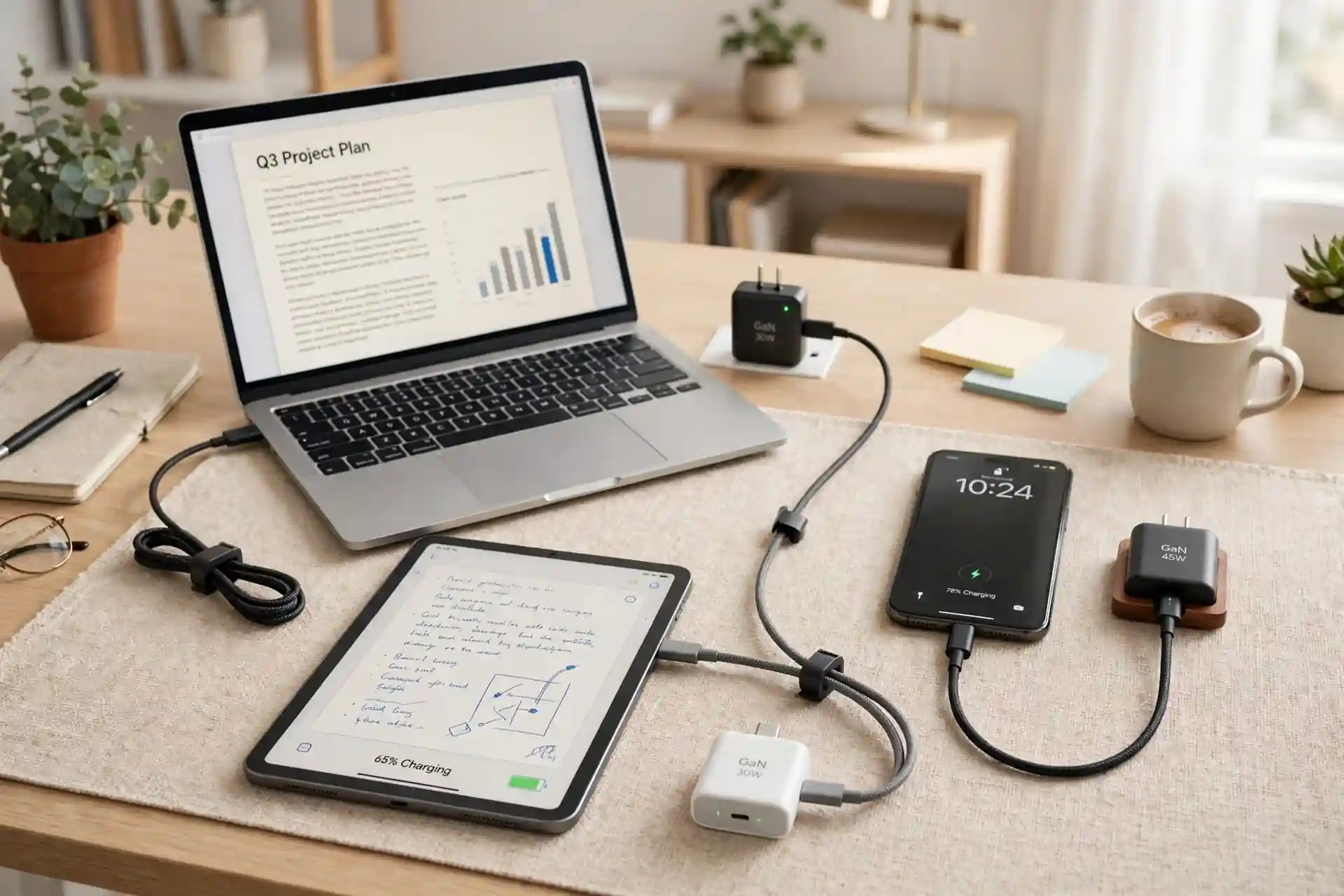
USB-C has become the universal charging connector for phones, tablets, laptops, headphones, and countless accessories, which is convenient until you stand in front of a wall of chargers and wonder which one is safe, which one is fast, and which one might damage your devices. The best USB-C chargers are not mysterious, but the details matter: wattage, port count, safety certifications, and cable quality all affect whether your devices charge quickly, safely, and reliably. This guide explains those details in plain language so you can buy with confidence.
The core concept is simple. A charger converts wall power into the voltage and current your device requests, and devices negotiate with the charger to agree on a safe charging speed. A good charger delivers what the device asks for, no more, no less. A bad charger may deliver inconsistent power, overheat, or lack the protections that prevent damage. Price alone does not tell you which is which, but certifications and reputable brands are strong signals.
Understanding Wattage: How Much Power Do You Need?
Wattage, measured in watts, describes how much power a charger can deliver. Phones typically need modest wattage, tablets need more, and laptops need the most, with larger laptops requiring substantially more than smaller ones. Using a charger with higher wattage than your device needs is generally safe, because the device draws only what it requests. Using a charger with too little wattage means slow charging, or a laptop that charges only while asleep or not at all under heavy use.
Check your device’s original charger or specifications for its expected wattage, and match or exceed it for the devices you charge most. If one charger will serve multiple devices, choose wattage that covers the hungriest one, typically a laptop, and check how power is shared across ports. Many multi-port chargers advertise a total wattage that splits when several devices connect, so a charger rated for high total power may deliver far less to each device simultaneously. Read the per-port specifications, not just the headline number.
Charging standards add another layer. USB Power Delivery, or USB PD, is the widely adopted standard that lets devices negotiate power levels intelligently, and it is the feature to look for first. Some brands use additional proprietary fast-charging protocols that work fastest only with their own chargers, so if you prioritize maximum speed for a specific phone, check whether it relies on a proprietary standard or standard USB PD. For most households, a good USB PD charger covers nearly everything well.
GaN Chargers: Smaller, Cooler, Better?
Gallium nitride, or GaN, is a newer semiconductor material that lets chargers run more efficiently, producing less heat in a smaller package. GaN chargers are noticeably smaller and lighter than traditional chargers of the same wattage, which makes them excellent for travel and crowded power strips. They also tend to run cooler, which is good for longevity and safety.
GaN is not magic, and it does not automatically make a charger safe. A well-designed traditional charger from a reputable brand beats a poorly designed GaN charger from an unknown seller. Treat GaN as a welcome bonus, smaller size and less heat, rather than a guarantee of quality. The fundamentals still matter most: certification, brand reputation, and honest specifications.
Charger Shopping Checklist
- Wattage that meets or exceeds your hungriest device, typically a laptop.
- USB Power Delivery support for broad, intelligent fast charging.
- Per-port wattage figures, not just total wattage, for multi-port models.
- Recognized safety certifications and a reputable brand.
- Enough ports for your daily devices, without overcrowding.
- A quality USB-C cable rated for the wattage you plan to use.
Safety Certifications and Cheap Charger Risks
Safety certifications are the most important line on the box. Look for marks from recognized testing laboratories, which indicate the charger passed independent safety testing for overheating, short circuits, and electrical faults. Chargers without credible certifications, especially suspiciously cheap ones from unknown sellers, are a genuine risk: they can overheat, damage devices, or in rare cases cause fires. Saving a few dollars is never worth that risk.
Warning signs include vague or missing certification marks, no brand website or support contact, exaggerated wattage claims, and cables that feel flimsy or overheat during use. If a charger or cable becomes unusually hot, smells strange, or causes a device to behave erratically, stop using it immediately. Our cybersecurity tips for Americans focus on digital safety, but the same principle applies to hardware: trust reputable sources and be skeptical of deals that seem too good to be true.
Counterfeit chargers are a real problem in online marketplaces. Buy from authorized sellers, check reviews for complaints about fakes, and compare packaging and markings with the manufacturer’s official images when in doubt. A genuine charger from a known brand, purchased from a legitimate retailer, is the simplest protection available.
Cables Matter as Much as Chargers
A great charger with a poor cable charges slowly or unreliably. USB-C cables vary in the power they can carry, the data speeds they support, and their build quality. A thin, unbranded cable may only handle low wattage, throttling a laptop charger to phone speeds, or may fail after weeks of bending. Choose cables rated for the wattage you need, from reputable brands, with reinforced connectors if they will see daily travel.
Cable length matters too. Longer cables are convenient but can reduce charging efficiency slightly and are easier to trip over or damage. For a desk setup, a short, sturdy cable is ideal. For a bedside or couch, a longer cable earns its keep. Keep spare cables where you need them, at your desk, in your bag, and by your bed, so you are never tempted to borrow an unknown cable in a pinch.
Battery care connects here as well. How lithium-ion batteries work explains why heat is the enemy of battery lifespan, and a quality charger that manages heat and negotiates proper power levels helps your devices’ batteries last longer. Avoid charging devices under pillows or in hot cars, and prefer chargers that stay cool during use.
Multi-Port Chargers and Travel Setups
Multi-port chargers are a traveler’s best friend, replacing a bag of single chargers with one compact unit. A good travel charger offers at least one high-wattage port for a laptop and additional ports for a phone, tablet, and accessories, with clear per-port ratings. Compact GaN models shine here, fitting easily into a bag and leaving power strips less crowded.
At home, a dedicated charging station keeps cables organized and devices in one place, reducing the clutter of chargers scattered across rooms. Wall chargers with multiple ports, desktop charging docks, and power strips with built-in USB-C ports each suit different setups. Choose based on how many devices charge simultaneously in your household and where they naturally gather. For families, a central station also makes it easier to enforce screen-free bedrooms, since devices charge outside them.
Choosing Your Charger
Buy for your hungriest device first, verify USB PD support and per-port wattage, insist on safety certifications from a reputable brand, and pair the charger with a quality cable rated for the same power. Keep a travel charger in your bag and a station at home, and replace any charger that runs hot, smells odd, or behaves strangely. Your devices, from modern smartphones to laptops and connected devices, depend on clean, safe power, and a good charger is the quiet foundation of all of it. For more tech essentials, see the coolest gadgets of the year and emerging technologies shaping how we power our lives.
Charging in a Connected World
Chargers are easy to overlook until one fails, yet they power everything else in your digital life. Understanding how the internet works and how Wi-Fi works helps you see the bigger picture: your devices are constantly communicating, syncing, and updating, and all of that activity depends on reliable power. Artificial intelligence features in modern phones and laptops manage charging intelligently, slowing overnight charging to protect battery health, but they can only do so when paired with a charger that negotiates power properly.
Choosing well also means avoiding waste. A single quality multi-port charger replaces several mediocre ones, reduces clutter, and lasts longer, which is better for your wallet and the environment. Our guide to tips for discovering hidden tech gems can point you toward well-reviewed accessories, and how microchips are made explains the remarkable engineering inside modern GaN chargers. Keep your chargers certified, your cables rated, and your devices powered, and the rest of your tech life will run far more smoothly.
Safe, fast, reliable charging is a small thing that improves every device you own. Choose a certified charger, pair it with a good cable, and stop thinking about power altogether.
One quality charger can replace a drawer full of unreliable ones, saving space, money, and frustration in the long run. Travel light, charge fast, and keep every device ready when you need it.
Charge smart, travel light, and stay powered wherever the day takes you.
Power up and go.
Before you buy, double-check your devices and their charging requirements, then choose a charger that covers your most demanding device first. A good charger should feel like a quiet upgrade: faster charging, less clutter, and one less thing to worry about during a busy day. Take your time, compare a few trusted options, and pick the one that fits your routine best.