The best wireless earbuds are the ones you actually enjoy wearing, and that simple test rules out more models than any spec sheet will. Earbuds live in your ears during commutes, workouts, calls, and study sessions, so fit and comfort matter as much as sound. A pair with impressive audio but a shape that slips or aches after an hour will end up in a drawer. Start by thinking about where you will use them most, because a commuter, a runner, and a remote worker need different strengths.
This guide explains sound quality, noise control, battery life, call quality, and fit in plain language. It also helps you sort useful features from marketing extras, so you can spend on what improves your day and skip what you will never touch. Whether you want earbuds for music, podcasts, calls, or all three, the steps below will help you narrow a crowded market to a short, sensible list.
Fit Comes First
Fit decides comfort, sound, and noise isolation all at once. Most earbuds come with several tip sizes, and trying each size is worth ten minutes of your time. A good seal keeps bass full and blocks some outside noise even before any electronic noise cancelling starts. If one ear feels different from the other, try different tip sizes for each side, because ears are rarely identical. Foam tips can help some people get a steadier seal, while silicone tips are easier to clean and often last longer.
Shape matters too. Some earbuds sit deep in the ear canal, others rest more shallowly, and some use a small wing or hook for sport. Deep-fitting models often isolate better but can feel intrusive, while shallow models feel lighter but may let more sound leak in. If you run or train, test how the buds feel when you move, chew, and turn your head, not just when you sit still. A pair that stays put during a workout is worth more than a pair that sounds slightly better on a couch.
Sound Quality in Plain Language
Good sound is balanced: clear voices, natural instruments, and bass that supports music without drowning it out. Very bass-heavy earbuds can be fun for a few songs but tiring over a long playlist, while very bright earbuds can make voices sound sharp. If you listen to podcasts and calls as much as music, pay attention to how voices sound, because muddy mids make speech harder to follow. Many companion apps offer an equalizer, which lets you adjust bass and treble to your taste without buying a new pair.
Volume and distortion matter as well. A good pair should sound clean at your normal listening level and not fall apart when you turn it up on a noisy train. Keep listening levels moderate, though, especially for long sessions, because hearing health matters more than squeezing out extra loudness. If you want to understand the tech behind quieter listening, reading how noise-cancelling headphones work explains the difference between passive isolation and active noise cancelling in a useful way.
Noise Cancelling and Transparency Modes
Active noise cancelling uses microphones to reduce steady background sounds like engines, fans, and office hum. It is excellent for flights and commutes, but it will not silence every sudden sound, and quality varies a lot between models. Transparency mode does the opposite: it lets outside sound in so you can hear announcements, traffic, or a colleague. For safety outdoors, transparency or a looser fit is often the smarter choice, especially when cycling or crossing streets.
Test these modes in a real setting if you can. A store demo in a quiet shop will not show how cancelling performs on a bus. Also check whether the mode switches easily, because fumbling with an app while walking is annoying. Some earbuds adjust cancelling automatically, which can be handy, while others give you a simple on-and-off control that is easier to trust. Choose the approach that fits how you move through your day.
Battery Life and Charging That Fits Your Routine
Battery claims usually combine earbud playtime with extra charges from the case, so read them carefully. What matters is how long the buds themselves last on one charge, because that decides whether they survive a workday or a long flight without a top-up. The case extends total time, but you still need to charge the case itself. A quick-charge feature can be a lifesaver: a short charge before you leave can often add enough time for a commute or a workout.
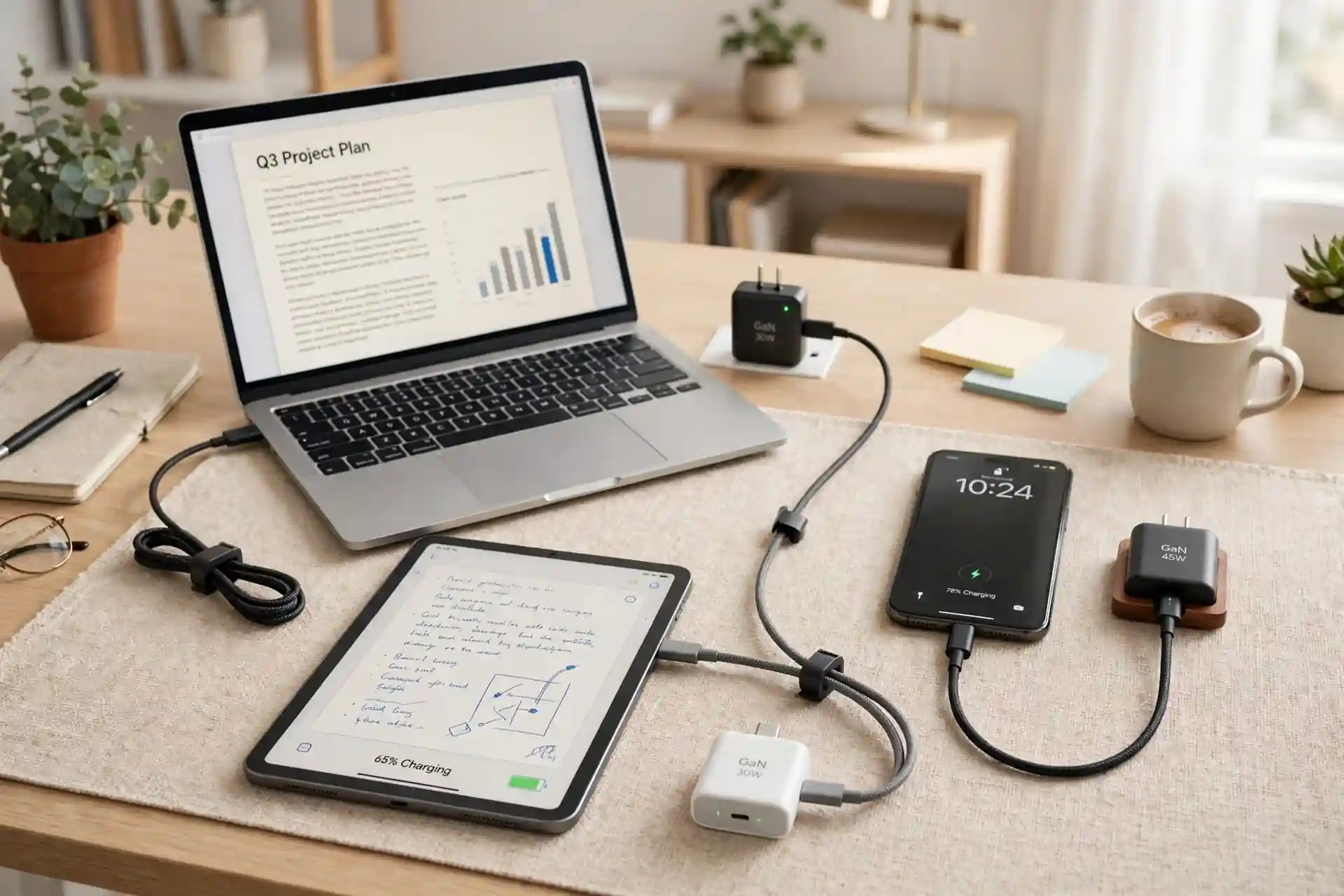
Charging style matters too. Some cases charge over a cable, others support wireless charging, and some do both. If you already charge a phone wirelessly at night, a wireless case can simplify your routine. It also helps to know how lithium-ion batteries work, because heat, full discharges, and leaving buds in a hot car can wear batteries down faster over time. Small habits, like storing buds in the case instead of a pocket, protect both battery and drivers.
Calls, Controls, and Connection
If you take calls on your earbuds, microphone quality matters as much as music quality. Multiple microphones and wind reduction help, but no small earbud mic will match a dedicated headset in a noisy street. Test calls in a realistic place if possible, and check whether the person on the other end hears you clearly. Multipoint connection, which lets earbuds stay linked to a phone and a laptop at once, is genuinely useful for people who switch between devices during the day.
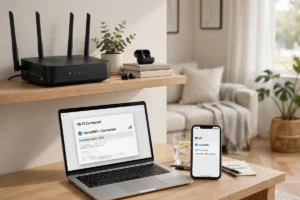
Controls should be simple and reliable. Touch controls look sleek but can trigger accidentally when you adjust fit, while button controls are easier to feel without looking. Check whether you can control volume, calls, and noise modes from the buds themselves, or whether you must reach for your phone. Connection stability also counts: earbuds should reconnect quickly when you open the case, and they should not drop out when your phone is in a pocket or bag. For background on wireless links, how home Wi-Fi works and how 5G networks work are helpful starting points, even though earbuds themselves use a short-range connection.
How Earbuds Fit Your Everyday Tech
Earbuds are part of a wider listening and communication setup, not an isolated gadget. They pair with a phone for calls, a laptop for meetings, a watch for workouts, and sometimes a TV or tablet for late-night shows. That is why how connected devices fit into daily life matters in a practical sense: devices that hand off smoothly feel effortless, while devices that fight for connection feel frustrating. Before buying, check that the buds pair easily with the devices you use most, and that switching between them does not require unpairing and repairing every time.
Streaming and downloads also shape the experience. Music and podcasts travel over your home or mobile connection, so a weak network can cause buffering that has nothing to do with the earbuds themselves. Learning how the internet actually works helps you separate a connection problem from a hardware problem, which saves unnecessary returns. On the move, how GPS navigation works features on a phone or watch can track runs while earbuds play music, and that combination is one reason many runners now train with just a watch and earbuds.
Security and privacy deserve a moment too. Earbuds and their apps can access contacts, location, or voice assistant data, so review permissions when you set them up and keep firmware updated, a habit that aligns with cybersecurity tips for 2026. The tiny computers inside earbuds also depend on efficient chips, and how microchips are made explains how those chips are made and why miniaturization matters for battery life and sound processing. When you understand that chain, it is easier to judge why some small buds sound excellent and others struggle.
Finally, place earbuds in context before you buy. Reading the coolest tech gadgets of 2026 and the coolest gadgets of the year can show how earbuds compare with speakers, headphones, and other audio gear for your budget. Some people prefer over-ear headphones at a desk and earbuds only for travel, while others want one pair for everything. There is no wrong answer, only a fit for your routine. Choose the pair that you reach for without thinking, because daily ease beats a spec advantage you rarely notice.
Mistakes to Avoid and a Simple Shortlist
Avoid buying only on brand or on a single review score. Sound taste is personal, and a top-rated pair for bass lovers may disappoint someone who mainly listens to speech. Avoid ignoring return policies, because fit is hard to judge from photos. Buy from a seller that allows returns, keep the packaging, and test the buds for several days across music, calls, and movement before deciding. Also check water and sweat resistance if you train with them, and clean tips regularly for hygiene and sound.
To shortlist, answer five questions: where will I use them, how long must one charge last, do I need strong noise cancelling, how important are calls, and what shape feels comfortable? Any pair that answers all five well is a strong candidate, even if it is not the most expensive model. The right earbuds should feel easy from the first week: comfortable, quick to connect, and pleasant for hours. That everyday ease, more than any single feature, is what makes a pair worth keeping.