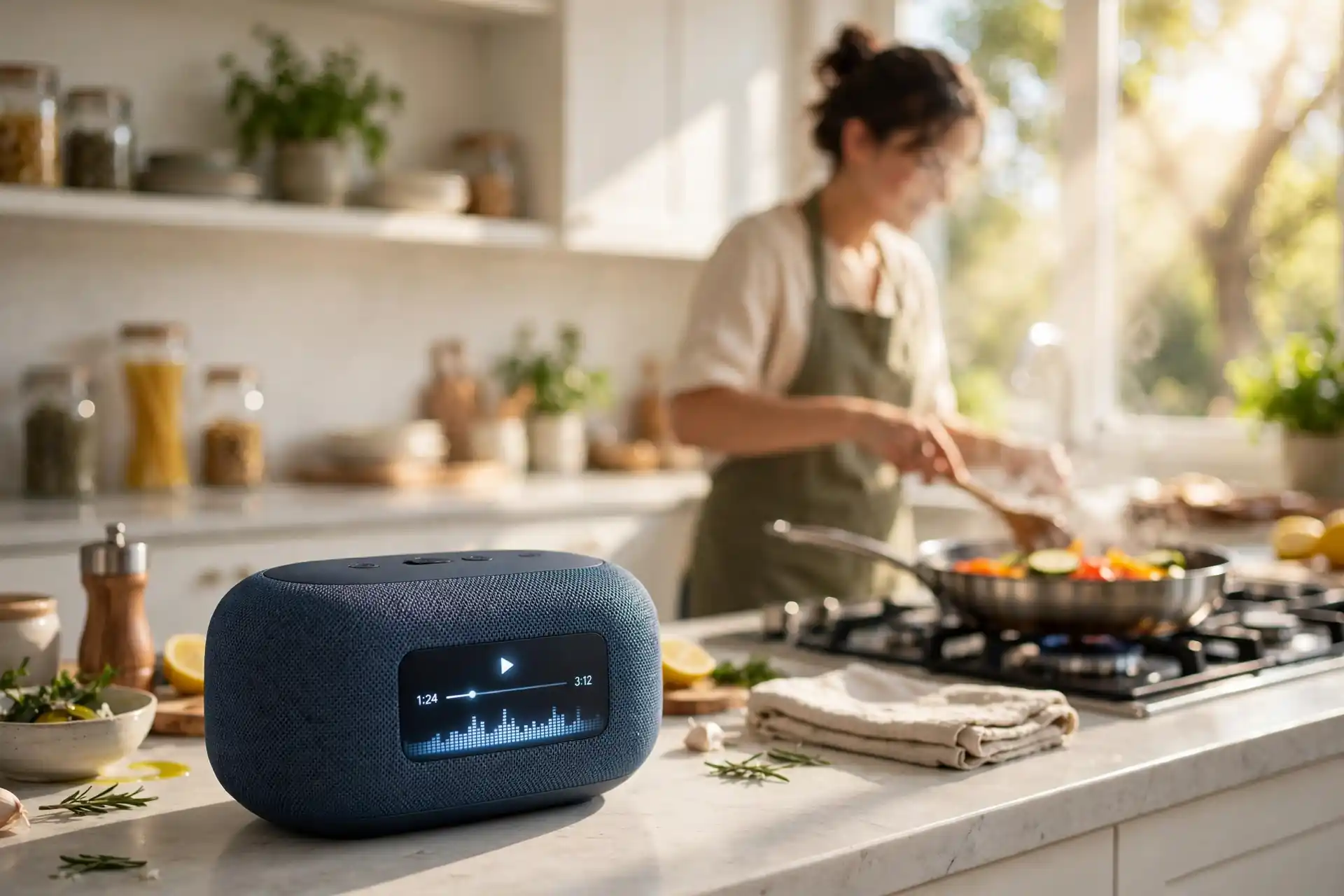
Smart home devices promise a home that responds to you: lights that dim on command, a thermostat that learns your schedule, a doorbell that shows who is at the door while you are away. For beginners, the sheer number of products can feel overwhelming, with competing brands, confusing standards, and the worry of buying the wrong thing. The good news is that starting a smart home is easier than it looks, as long as you begin small, choose one ecosystem, and add devices gradually.
This guide is for people with no smart home experience. You do not need to rewire your house or spend a fortune. A single smart speaker and a couple of well-chosen devices can transform daily routines, and from there you can expand at your own pace, learning what you actually use before buying more.
How Smart Home Devices Work
Most smart home devices are ordinary appliances with added connectivity and software. A smart bulb contains a tiny computer and a wireless radio alongside the light itself. A smart thermostat adds sensors and internet access to a familiar control. Devices talk to each other and to your phone through your home Wi-Fi, or through low-power protocols designed for small gadgets, and a central hub or smart speaker often coordinates them.
Voice assistants are the most common control point. You speak a command, the speaker sends it to the cloud for interpretation, and the instruction returns to the right device. Apps offer a second control method, with schedules, routines, and remote access. Routines are where the magic happens: a single command like good night can lock doors, dim lights, lower the thermostat, and arm the security system, all at once. If you are curious about the networking behind it, our guide to how Wi-Fi works explains why a strong, well-placed router is the foundation of every smart home.
Behind the convenience sits a growing web of internet-connected devices and connected devices in the home, and understanding that web helps you shop wisely. Devices from different brands do not always work together, which is why ecosystems and compatibility standards matter more than any single product’s features.
Pick One Ecosystem First
The single most important beginner decision is choosing an ecosystem: the platform that ties your devices together. The major options each have strengths, and the best choice usually depends on the phone and services you already use. If your household runs on one brand’s phones, speakers, and tablets, staying within that family usually gives the smoothest experience. If your household mixes brands, look for platforms and standards that bridge them.
A newer standard called Matter aims to improve cross-brand compatibility, letting devices from different makers work together more reliably. It is still rolling out, so check Matter support when shopping, but do not treat it as a guarantee for every feature. Read compatibility lists before buying, and prefer devices that explicitly support your chosen ecosystem rather than assuming they will work. This one habit prevents most beginner frustration.
The Easiest First Devices
- A smart speaker or display, which becomes your voice control center.
- Smart bulbs or plugs, which are cheap, easy to install, and instantly useful.
- A smart thermostat, which can save energy once it learns your routine.
- A video doorbell, which adds security and convenience in one device.
- A smart lock, for keyless entry and temporary codes for guests.
Setting Up Your First Devices
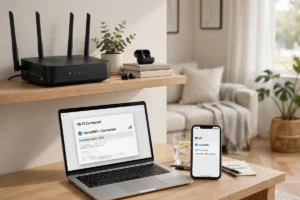
Start with your network. A smart home is only as reliable as its Wi-Fi, so place your router centrally, update its software, and consider a mesh system if your home is large or has dead zones. Set up devices one at a time, testing each before adding the next. Rushing through five installations at once makes troubleshooting miserable when something does not work.
During setup, pay attention to accounts and passwords. Use a unique password for your smart home accounts and turn on two-factor authentication where available. Give devices sensible names, like living room lamp rather than bulb 3, because you will speak those names daily. Create a simple routine early, such as a morning routine that turns on lights and reads the weather, so you experience the payoff that makes further expansion worthwhile.
Security deserves emphasis from day one. Change any default passwords, keep device software updated, and review which devices have cameras or microphones and where they are placed. Our cybersecurity tips for Americans cover these habits in detail, and they apply to every gadget you bring home. A smart home should feel helpful, not watched, and thoughtful setup is what makes that difference.
Common Beginner Mistakes to Avoid
The most common mistake is buying too much, too fast. A cart full of gadgets from five brands, installed in one weekend, usually ends in frustration and a drawer of unused devices. Buy one device, live with it for a week, and only then decide what to add. The second mistake is ignoring compatibility, which leads to apps that cannot talk to each other and routines that fail silently. The third is placing devices poorly: a speaker in a noisy corner, a camera facing a blank wall, or a sensor in direct sunlight will all disappoint through no fault of the product.
Another mistake is forgetting the household. A smart home that only one person understands will annoy everyone else. Teach family members the basic commands, post a simple cheat sheet near the speaker, and make sure lights and locks still work manually when the internet is down. The best smart homes are the ones guests can use without a tutorial.
Costs, Privacy, and What to Expect
Costs vary, and it is wise to avoid quoting exact prices that change with sales. As a general guide, starter devices like bulbs and plugs are inexpensive, speakers sit in the middle, and thermostats, doorbells, and locks cost more but often deliver the most daily value. Some devices require subscriptions for full features, such as extended video history, so check ongoing costs before buying, not just the sticker price.
Privacy is a fair concern. Smart devices collect data to function: voice commands, temperature patterns, and motion events. Review privacy settings during setup, delete recordings periodically if the option exists, and keep cameras out of bedrooms and bathrooms. Reputable brands explain their data practices clearly; vague or hard-to-find policies are a warning sign. For inspiration on what to buy next, see our roundup of the coolest gadgets of the year and our tips for finding hidden tech gems.
Growing Your Smart Home Over Time
Once the basics work, expansion becomes fun rather than stressful. Add room-by-room: a bedroom routine for better sleep, a kitchen display for recipes and timers, or outdoor lights on a sunset schedule. Consider energy and safety next: efficient heating systems and solar panels pair naturally with smart thermostats and energy monitors, while artificial intelligence features in newer devices learn your habits and automate more over time.
Keep a simple inventory of what you own, which ecosystem each device uses, and when warranties expire. It sounds dull, but it saves hours when you move, upgrade your router, or replace a phone. And remember that a smart home is a journey, not a destination: emerging technologies will keep adding possibilities, and faster networks will make them more responsive. Start small, choose wisely, and let your home get smarter at the pace that suits your life.
Smart Home Routines Worth Trying
Once your first devices work, routines turn a collection of gadgets into a genuinely helpful home. A morning routine can gradually brighten bedroom lights, start the coffee maker through a smart plug, and read the day’s weather and calendar. An away routine can lock doors, turn off lights, and arm cameras when the last person leaves. A bedtime routine can dim the house, lower the thermostat, and confirm that doors are locked, all from a single command or an automatic schedule.
The trick is to automate only what you actually repeat. Start with one routine tied to a real daily moment, live with it for two weeks, and adjust the details before adding another. Routines that nobody uses are clutter; routines that save you five minutes every morning are life upgrades. Involve your household in designing them, because a routine that works for one person but confuses everyone else will be abandoned quickly. The best smart home is the one the whole family enjoys, not the one with the most devices.
Over time, you will develop a feel for what belongs in your home and what does not. Some people love voice control everywhere; others prefer schedules and sensors that work silently in the background. Both approaches are valid, and the right mix is personal. Let your routines evolve with your life, revisit them when seasons change, and do not be afraid to remove devices that no longer earn their place. A smart home should simplify your days, and simplicity is worth protecting as your system grows.
Start tonight with one small step: pick the single routine that would make tomorrow morning easier, and set it up before bed. Small beginnings lead to smart homes that truly serve the people living in them.