In 2020, Jennifer Doudna and Emmanuelle Charpentier won the Nobel Prize in Chemistry for a discovery that lets scientists edit DNA almost as easily as correcting a typo in a document. That tool is called CRISPR, and it is quietly reshaping medicine, agriculture, and even how we think about inherited disease. Here is what CRISPR actually is, how it works, and why it matters for Americans in 2026.
What Is CRISPR? The Short Answer
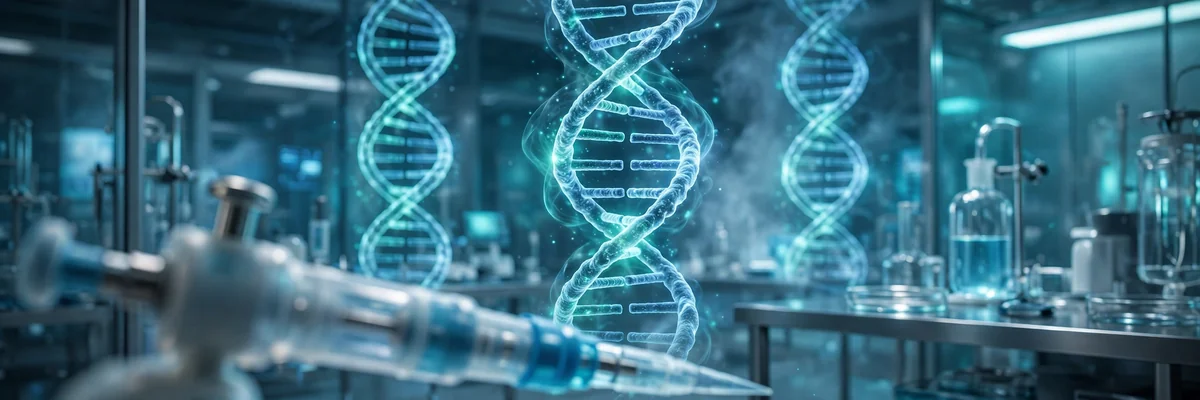
CRISPR (pronounced “crisper”) is a gene-editing technology that lets scientists find a specific sequence of DNA inside a cell and cut, remove, or replace it with remarkable precision. Before CRISPR, editing genes was slow, expensive, and unreliable. CRISPR made it fast, cheap, and accurate — turning gene editing from a specialist art into a standard laboratory technique used worldwide.
Where Did CRISPR Come From?
The story starts with bacteria. Scientists noticed that bacteria carry strange repeating DNA sequences — the “clustered regularly interspaced short palindromic repeats” that give CRISPR its name. These turned out to be a bacterial immune system: a mugshot gallery of past viral attackers. When a virus returns, the bacterium uses a protein called Cas9 as molecular scissors to cut the invader’s DNA. Doudna and Charpentier’s breakthrough was realizing this bacterial defense system could be reprogrammed to cut any DNA sequence humans choose — including our own.
How CRISPR Works: A Step-by-Step Explanation
Step 1: Design the guide. Scientists create a short piece of RNA (the “guide RNA”) that matches the exact DNA sequence they want to target — say, the mutation that causes sickle cell disease. This is the GPS coordinate.
Step 2: Attach the scissors. The guide RNA is loaded into the Cas9 protein, forming a search-and-cut complex. This is the workhorse of modern microbiology research.
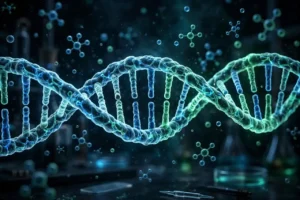
Step 3: Find and cut. The complex scans the cell’s DNA until the guide RNA finds its match, then Cas9 snips both strands of the double helix at that precise spot.
Step 4: Repair or replace. The cell’s own repair machinery rushes in. Scientists can let the cell disable the cut gene — or supply a corrected DNA template so the cell pastes in the healthy version. That last option is how genetic diseases could be cured at their source.
What CRISPR Is Already Doing in 2026
Approved therapies: The FDA has approved CRISPR-based treatments for sickle cell disease and beta thalassemia. Patients who once faced a lifetime of transfusions and pain crises are now living with their own corrected blood cells.
Cancer research: Trials are using CRISPR to engineer patients’ immune cells to hunt tumors more aggressively. Early results in certain blood cancers are striking, and researchers tracking 2026’s medical innovations rank gene-edited cell therapies among the most promising.
Agriculture: CRISPR-edited crops — disease-resistant rice, longer-lasting tomatoes — are reaching markets faster than old-style GMOs because the edits often involve no foreign DNA at all.
CRISPR and Artificial Intelligence: A Powerful Pair
One of the most exciting frontiers is AI designing better CRISPR tools. Machine learning models now predict which guide RNAs will cut most precisely and where unintended “off-target” cuts might occur, making therapies safer before they ever reach a patient. It is a vivid example of how artificial intelligence is reshaping American science, not just American business.
The Ethical Questions Nobody Can Dodge
Editing the DNA of a patient to cure their disease affects only that person. But editing embryos — “germline editing” — would pass changes to every future generation. After a Chinese scientist’s widely condemned 2018 experiment created the world’s first gene-edited babies, the global scientific community drew a hard line: somatic (body-cell) editing for therapy is moving ahead; heritable editing remains off-limits. As with any powerful tool, the debate now is about governance — and it is happening in labs, legislatures, and living rooms across the country.
Common Myths About CRISPR
Myth: CRISPR creates “designer babies” today. Reality: we are nowhere near safe, reliable trait selection, and it is banned or heavily restricted in most countries.
Myth: Gene editing is 100 percent precise. Reality: off-target effects are real but shrinking fast thanks to better guides and AI prediction.
Myth: It is only for humans. Reality: some of the biggest near-term impacts are in agriculture and conservation, from blight-resistant crops to protecting endangered species.
Careers in Gene Editing
CRISPR has created an entire job ecosystem: guide-RNA designers, delivery specialists, bioethicists, and clinical coordinators. For students drawn to cutting-edge life science, specialized paths like reproductive science careers show how deep the field goes. It is also a perfect case study in how research shapes everyday life — a bacterial immune system became a medicine cabinet.
Conclusion
CRISPR is a programmable pair of molecular scissors borrowed from bacteria: guide RNA finds the target, Cas9 makes the cut, and the cell does the rest. It has already produced FDA-approved cures, and the pipeline of trials grows every year. The science is moving fast; the ethics are moving deliberately. Both deserve your attention, because gene editing will touch healthcare, food, and family decisions for the rest of this century.
For the full rundown of approved treatments, costs, and what comes next, see our gene therapy 2026 guide.
Gene-edited stem cells are one of the most promising pairings in medicine — see our stem cells 2026 guide for the approved therapies and what’s still hype.