Robots are having their moment. After decades of science-fiction promises, 2026 is the year robots stepped out of research labs and into American warehouses, hospitals, farms — and living rooms. Driven by cheaper hardware and smarter AI brains, the robotics revolution — one of the most exciting emerging technologies of 2026 — is accelerating fast.
Here is what is actually happening in robotics right now, what it means for American workers and families, and how to think about a future shared with machines.
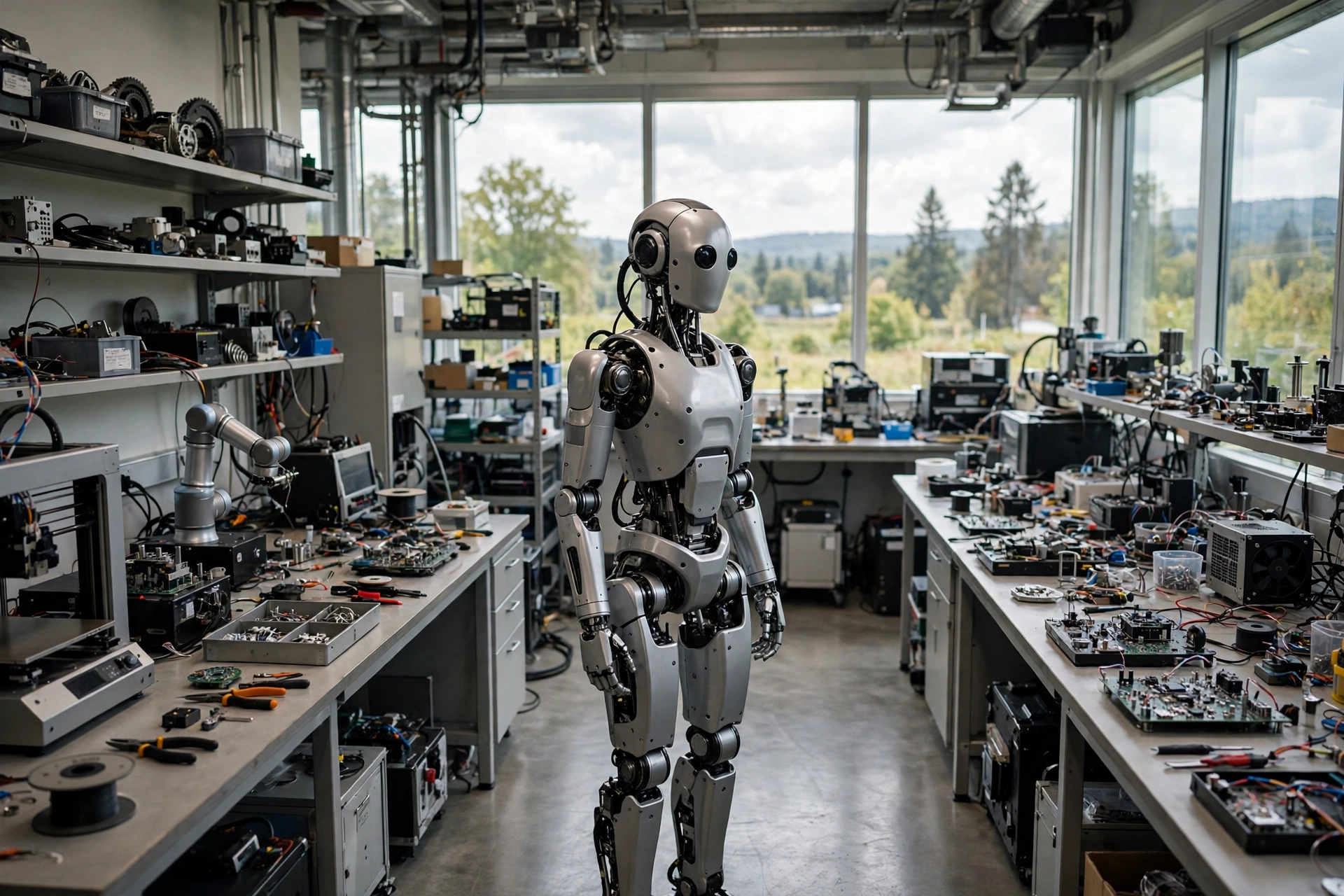
1. Humanoid Robots Step Out of the Lab
The most eye-catching robotics trend of 2026 is the rise of humanoid robots. Companies like Tesla, Figure, and Agility Robotics are piloting bipedal machines in real warehouses and factories — pushing the boundaries of our high-tech universe — where they move boxes, sort packages, and handle repetitive tasks alongside human coworkers.
Why humanoid? Because the world is built for human bodies — stairs, door handles, car seats. A robot with arms, legs, and hands can work in spaces designed for people without expensive remodeling. Costs are falling rapidly, and several companies aim to offer humanoids at the price of a car within a few years.
2. Robots at Work: Warehouses, Farms, and Hospitals
Beyond humanoids, specialized robots are quietly transforming American industries. In warehouses, autonomous mobile robots ferry goods while robotic arms pick and pack orders — a big reason your online packages arrive so fast. On farms, robots weed fields, pick fruit, and monitor crops with precision that reduces pesticide use.
In hospitals, robots deliver medications and linens, disinfect rooms with UV light, and assist surgeons with steady, precise movements. These are not replacements for nurses and doctors but force multipliers in a healthcare system facing staffing shortages.
3. Home Robots: From Vacuums to Genuine Helpers
Robot vacuums were just the beginning. In 2026, home robots are getting dramatically more capable: lawn-mowing robots that map your yard, window-cleaning bots, and early versions of mobile home assistants that can tidy rooms, do laundry runs, and remind grandparents to take medications.
The smart home of the future is increasingly a robotic one, filled with connected devices. Prices remain high for the most capable machines, but as with every technology, costs fall as production scales.
4. What the Robotics Boom Means for American Jobs
The jobs question is unavoidable — and the honest answer is complicated. Robots excel at repetitive, dangerous, and physically demanding work: the jobs with the highest injury rates and hardest hiring. In warehouses and factories, robots are often filling roles employers struggle to staff, not displacing eager workers.
Still, disruption is real. The workers who thrive will be those who learn to operate, maintain, and collaborate with robotic systems. Community colleges across the US are expanding robotics technician programs, and employers increasingly value “robot wrangling” skills. The AI trends of 2026 tell a similar story: adapt, and the machines become your leverage.
5. Safety and Trust: Living Alongside Robots
For robots to succeed in homes and workplaces, people must trust them. Manufacturers are investing heavily in safety: force-limited joints that cannot crush fingers, sensors that stop a robot when a person gets close, and rigorous testing standards. Regulators are catching up too, with new frameworks for workplace robotics and autonomous machines in public spaces.
Privacy matters as well. Home robots with cameras and microphones — like other IoT and smart devices — need clear data policies — look for devices that process data locally and let you review or delete recordings. For families considering a home robot, start small: a robot vacuum or lawn mower is a low-risk way to experience the technology. Read reviews focused on reliability and support, check what data the device collects, and pair it with good cybersecurity habits to keep your robotic helpers from becoming vulnerabilities.
6. Getting Started: Explore Robotics Yourself
Curious about robotics beyond the headlines? There are easy ways to get hands-on. Affordable robot kits let kids and adults build and program real machines for under $100, and many public libraries now lend robotics kits and host coding clubs. For career changers, online courses in robot operating systems and automation — following the latest software development trends — are widely available, and community colleges are expanding technician programs to meet demand. You do not need an engineering degree to start — curiosity and a weekend project are enough to join the robotics revolution.
7. What to Watch Next in Robotics
The next twelve months promise major milestones: wider warehouse deployments of humanoid robots, the first consumer-grade home assistants from big tech brands, and new safety standards that could accelerate adoption. Keep an eye on falling prices — analysts expect capable home robots to drop below the $1,000 mark within a few years, the tipping point that once turned robot vacuums from luxuries into household staples. The robotics revolution is just getting started, and the machines arriving next will make today’s look primitive.
Conclusion
The robotics revolution of 2026 is not about machines replacing humans; it is about machines taking on the dull, dirty, and dangerous work so people can focus on what they do best. From the warehouse to the living room, robots are becoming coworkers, assistants, and helpers. Americans who understand the technology — its promise and its limits — will be best positioned to benefit from the robotic age now arriving.
Robots are also embracing digital manufacturing — learn what is 3D printing to see how printed parts are speeding up prototyping and repairs across warehouses and factories.