Your gut does far more than digest dinner. It houses trillions of microbes, known as the gut microbiome, that help break down food, make certain vitamins, support the immune system, and communicate with the brain. When that microbial community is diverse and balanced, digestion tends to run more smoothly. When it is disrupted by illness, antibiotics, poor diet, or chronic stress, bloating, irregularity, and discomfort can follow. Food is one of the most direct ways to support gut health, because what you eat feeds both you and your microbes.
This guide is general information, not a treatment plan for digestive disease. If you have persistent abdominal pain, blood in stool, unexplained weight loss, severe bloating, or symptoms that do not improve, talk with a clinician, since those signs can indicate conditions that need evaluation. For most people without a diagnosed condition, a varied, fiber-rich diet with fermented foods and plenty of plants is a friendly starting point for gut health.
Fiber: Food for Your Microbes
Fiber is the star nutrient for gut health, because much of it reaches the colon intact, where microbes ferment it into compounds that nourish the gut lining. There are two broad types. Soluble fiber, found in oats, beans, lentils, apples, pears, and flaxseed, dissolves in water and forms a gel that slows digestion and feeds microbes. Insoluble fiber, found in whole wheat, vegetables, and skins of fruits, adds bulk and helps keep things moving. Most plant foods contain a mix, so eating a variety covers both.
Increase fiber gradually and drink enough water, since a sudden large jump can cause gas and bloating while your gut adjusts. Start by adding one fiber-rich food at a time, such as beans in a soup, berries at breakfast, or an extra vegetable at dinner, and build over weeks. A diverse fiber intake matters more than a single source: different fibers feed different microbes, so a mix of grains, beans, fruits, and vegetables supports a more diverse microbiome than the same fiber repeated daily. That diversity is a theme across gut science, much as microbiology shows how tiny organisms shape health in many systems.
Fermented Foods and Probiotics
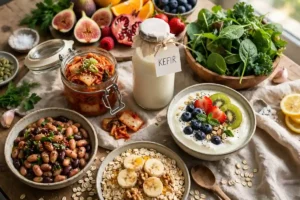
Fermented foods contain live microbes created during fermentation, and they can add variety to the gut community. Yogurt with live active cultures, kefir, sauerkraut, kimchi, miso, tempeh, and some pickles fermented in brine (not vinegar) are common examples. These foods also offer flavor, tang, and texture that make meals more interesting. A daily serving of yogurt or kefir, or a small side of sauerkraut or kimchi, is a simple way to include them without overhauling your diet.
Probiotic supplements, which contain specific strains of microbes, are a different matter. Evidence for them varies by strain and condition, and they are not a substitute for a varied diet or medical treatment. Some people find them helpful for specific issues under clinician guidance, while others notice little effect. If you consider a probiotic, discuss the strain, dose, and duration with a clinician or dietitian, especially if you are immunocompromised or have a serious illness. For most healthy people, fermented foods and a fiber-rich diet are a safer, tastier first step than a shelf of supplements. Pairing gut-friendly eating with regular movement and wellness habits also supports digestion, since activity helps gut motility.
Prebiotics: Feeding the Good Microbes
Prebiotics are fibers and compounds in food that selectively feed beneficial microbes. Onions, garlic, leeks, asparagus, bananas, oats, barley, beans, and Jerusalem artichokes are rich in prebiotic fibers. Cooking does not destroy all prebiotics, and many of these foods are already pantry staples, so adding them is easy: garlic and onions in a sauce, leeks in soup, bananas in oatmeal, or beans in a salad. Some people with irritable bowel conditions find certain prebiotic fibers trigger symptoms, so if a food consistently causes pain or severe bloating, note it and discuss it with a clinician or dietitian rather than forcing it.
The combination of probiotics and prebiotics, sometimes called synbiotics when eaten together, is simply good cooking in practice: yogurt with berries and oats, kimchi with rice and vegetables, or miso soup with tofu and seaweed. You do not need to memorize the science to benefit. Eating a wide range of plants, including fermented foods, naturally combines live microbes with the fibers that feed them. That variety, repeated daily, is the core of gut-friendly eating.
Foods and Habits That Can Disrupt the Gut
Certain eating patterns can make gut symptoms worse, though tolerance varies widely. Highly processed foods, large amounts of added sugar, excessive alcohol, and very fatty meals can disrupt digestion for some people, especially when they crowd out fiber and plants. Artificial sweeteners affect people differently, and some find they trigger bloating. Eating very quickly, skipping meals, or eating large late-night meals can also worsen reflux or discomfort. Slowing down, chewing well, and eating regular, moderate meals often help as much as any single food choice.
Stress and sleep affect the gut too, through the gut-brain connection. Stress can speed up or slow down gut movement, increase sensitivity to discomfort, and change eating habits. That is why gut health improves when stress, sleep, and movement are addressed alongside diet. Antibiotics, while sometimes essential, can also disrupt the microbiome temporarily. If you are prescribed antibiotics, take them exactly as directed, finish the course unless your clinician advises otherwise, and support recovery afterward with a varied, fiber-rich diet. Never take leftover antibiotics or share them, since misuse harms both you and the wider community.
Building Gut-Friendly Meals
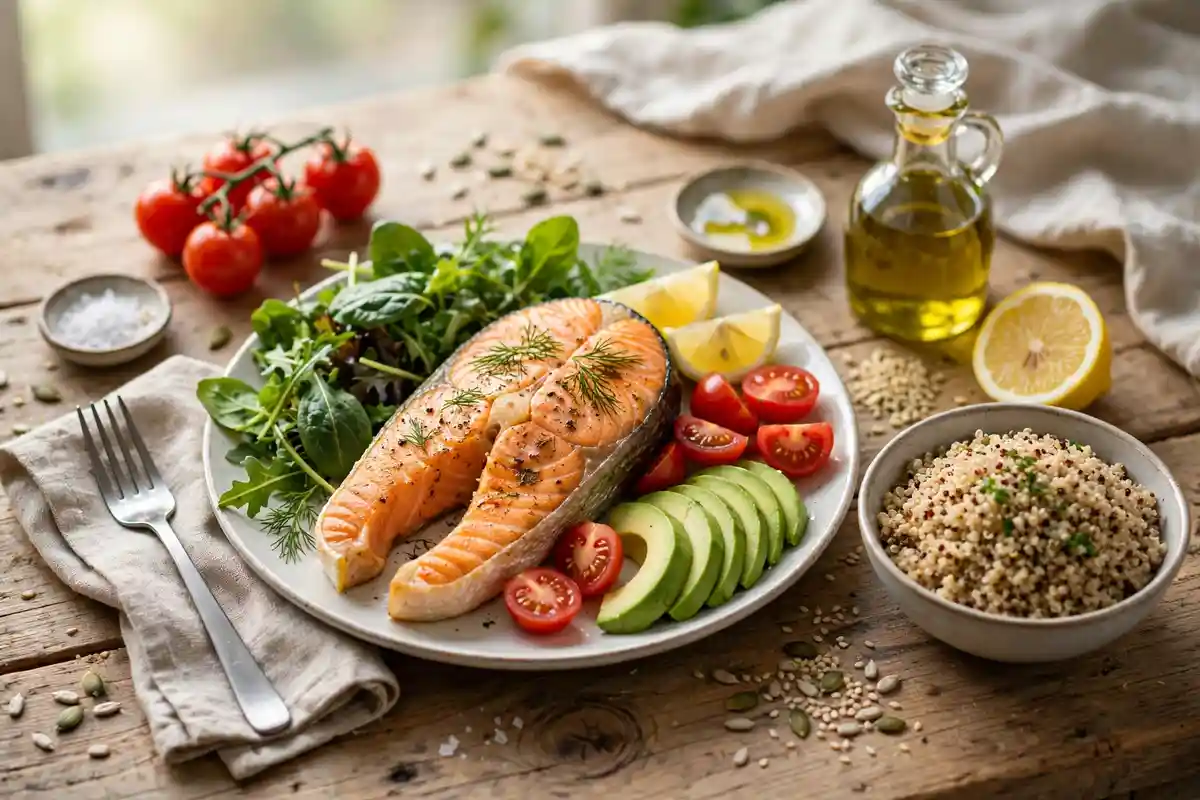
A gut-friendly day might start with oatmeal topped with berries, banana, and yogurt. Lunch might be a bean and vegetable soup with whole-grain bread, or a salad with chickpeas, leafy greens, and fermented pickles. Dinner might be grilled fish or tofu with brown rice, roasted vegetables, and kimchi or sauerkraut on the side. Snacks might be fruit, nuts, or kefir. The pattern is consistent: plants at every meal, fiber from varied sources, a fermented food most days, water throughout the day, and less reliance on highly processed foods.
Hydration supports fiber’s work, helping stool stay soft and regular. Water is the main source, with soups, fruits, and vegetables adding fluid too. Herbal teas such as peppermint or ginger are enjoyed by many people for digestion, though evidence varies and they are not treatments for disease. If you try a new food or tea, introduce it singly and notice your response over a few days, rather than changing many things at once. That simple tracking makes it easier to identify what helps you personally, which matters because gut responses are individual.
Gut Health, Antibiotics, and Recovery
Antibiotics save lives, but they can temporarily change the gut microbiome by reducing both harmful and helpful bacteria. After a necessary course, many people notice looser stools, bloating, or changes in appetite for a time, and those symptoms usually settle as the microbiome recovers with varied, fiber-rich eating. Fermented foods, diverse plants, adequate fluids, and regular sleep can support that recovery, though no food guarantees a fast return to baseline. If digestive symptoms after antibiotics are severe, bloody, or prolonged, seek care promptly, since certain infections can follow antibiotic use and need specific treatment.
Travel also tests gut health, as new foods, water, and microbes meet a microbiome adapted to home. Eating freshly cooked foods, drinking safe water, washing hands, and introducing unfamiliar foods gradually can reduce risk, while still allowing enjoyment of local cuisine. Some travelers carry a simple plan for mild stomach upset, such as oral rehydration and bland foods, and seek care for fever, bloody stools, or symptoms that do not improve. Recovery after travel, like recovery after illness, is a good time to return to familiar, plant-rich meals and regular routines, giving the gut community time to settle. For people who need ongoing help with meals and daily care, personalized support for independent living can make gut-friendly routines easier to sustain.
Keeping a simple food and symptom diary for a week or two can also help you learn your own patterns. Note what you ate, when symptoms appeared, how you slept, and how stressed you felt. Over time, patterns often emerge that a single day would hide, such as symptoms after very large meals, late eating, or specific foods eaten in large amounts. Share that diary with a clinician or dietitian if symptoms persist, since it gives them far more useful information than a general description alone.
Gut health is a long game, not a quick cleanse. There is no food that resets the microbiome overnight, and cleanses or detox products are not needed for a healthy gut and can sometimes be harmful. What works is steady, varied, plant-rich eating, fermented foods when tolerated, good hydration, movement, sleep, and stress care, sustained over months. If symptoms persist, seek care rather than restricting your diet further on your own, since unnecessary restriction can reduce diversity and nutrition. Further reading includes health science breakthroughs, mental health and well-being, healthcare services and patient care, healthcare and patient care guides, at-home care options, oral care and health, and how research shapes everyday life. Feed your microbes well, and they will return the favor in digestion, comfort, and overall well-being.